



How to participate
The World Food Safety Day slogan is “Food safety is everyone’s business.” This is because we are all stakeholders in the food system, and we can all play a part in keeping food safe. Whether you oversee food safety systems, or grow, process, transport, store, distribute, sell, prepare, serve or even just eat food, there is something you can do to join in
Here are some ideas to help you plan an event for World Food Safety Day.
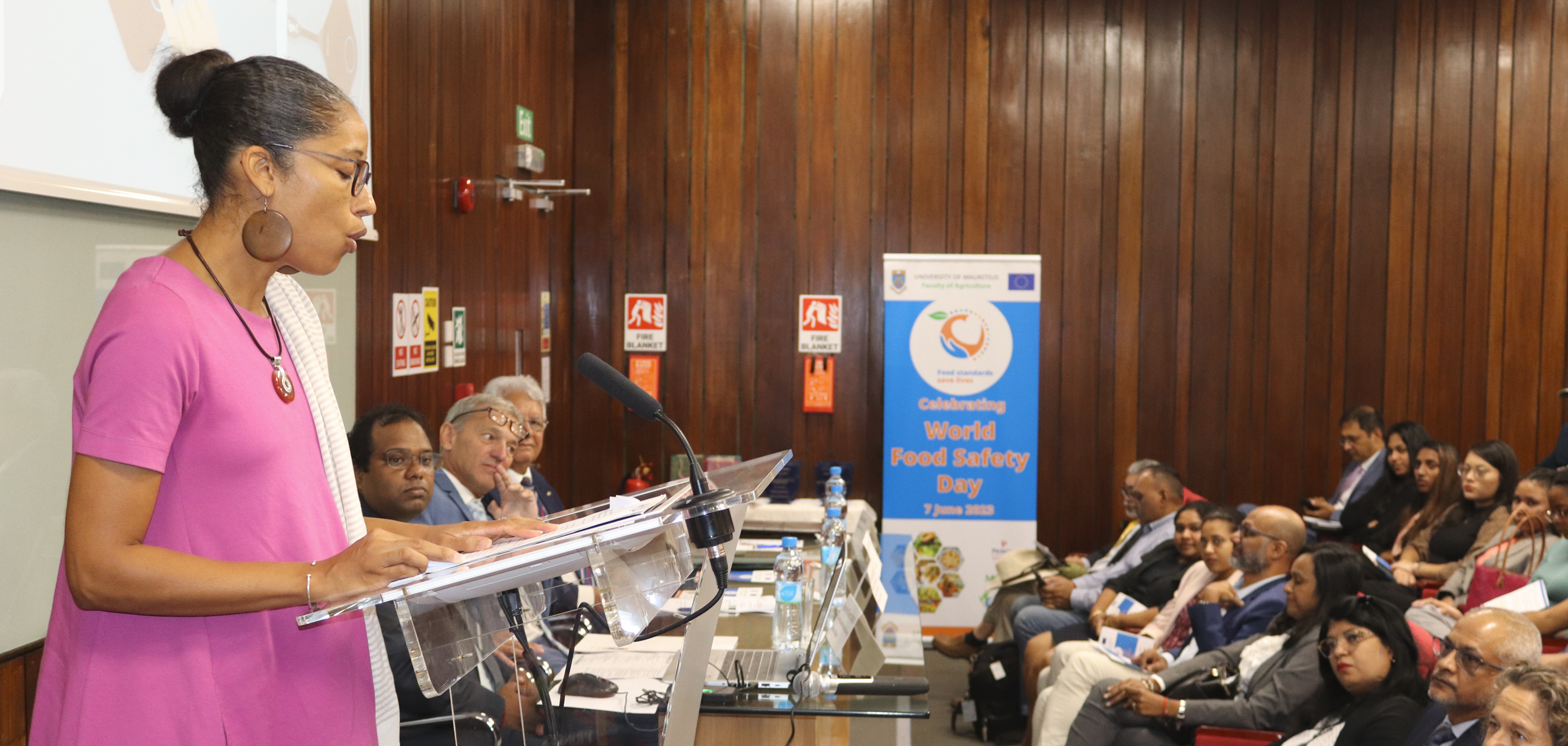
Organize talks and demonstrations on food safety
Invite people who grow, process, sell and/or cook food to talk about or even demonstrate what they do and how food safety is important for them. This can be in a school, workplace or community space.
Host a workshop or conference
Bring together food experts from different businesses, sectors or disciplines to share their expertise and discuss how food safety can be improved in your sector, school, university, community or workplace.
Get the media involved
Share food safety knowledge through radio interviews, talk shows or media briefings. Contact your local newspaper or TV station to propose coverage of food safety.
Hold an outdoor activity
Organize a run, walk, cycle ride, dance or fitness class – where possible – to publicize food safety as a key to sustaining life and promoting good health. Encouraging people to be physically active can be a good way to raise awareness about food safety in your community
.png?sfvrsn=fd8d12c6_1 "ci-tilapia-2(1)")
.png?sfvrsn=aa957779_1 "ci-tilapia-2(2)")
Run a competition
Poster or photography competitions around a theme are popular for schools, universities, in communities and in workplaces. Encourage participants to find out about food safety and visualize what they learn to pass the message on. Winning entries can be used in your public spaces to continue awareness raising on food safety.
Engage youth
Involve students in food safety activities at schools, youth centres or youth events. This way young people can learn about food safety and pass on the message that by changing simple day-to-day actions, they can avoid the perils of foodborne disease.
Create a photo montage
Visually document good food safety practices and make a collage or produce an exhibition that shows food safety in action.Produce a video
Conduct an interview or record the food safety practices of a business. Research the topic so you can ask informed questions. Share the video with friends, colleagues, classmates or fellow students.Publicize
It doesn’t have to be a big affair or involve equipment, money and lots of people. Simply posting World Food Safety Day materials on social media helps spread awareness about food safety.
Use the #WorldFoodSafetyDay hashtag and share on Facebook, Instagram, TikTok and other social media channels.
.png?sfvrsn=69db3491_1 "ci-tilapia-2(3)")
.png?sfvrsn=fce50ee6_1 "ci-tilapia-2(4)")
Collect personal stories
Document stories about food workers, farmers, health professionals or someone who has suffered a foodborne illness. Sharing experiences can help people understand just how important food safety is. The stories can be written, drawn, photographed, sung, dramatized or recorded.Get creative!
There are numerous ways you can learn about food safety and share your knowledge. Conduct a survey or run a quiz. Develop and act out a drama with friends, write a song or poem. The sky’s your limit!National governments are critical in ensuring safe and nutritious food for all. Policymakers and agencies can use the World Food Safety Day to create awareness in the public and foster collaboration among the public health, animal health, and agriculture sectors, including engaging businesses and civil society. Actions that can be taken include:
- Organize a public event or activities aimed at the
general public – concerts, festivals or fairs, food tastings or cooking
demonstrations with a #foodsafety message.
To make it virtual: Public
gatherings are not going to be easy for authorities working under
COVID-19 restrictions but a great deal of creativity has been
demonstrated in adapting events to the online world. Music concerts and
demonstrations with virtual audiences are now a ‘new normal’.
- Host
a panel or roundtable that brings together key players in the food
system to talk about everyone’s role in food safety, including, for
example, political leaders, educators, scientists, farmers and consumer
group representatives. Follow the discussion with a question-and-answer
session to encourage involvement.
- Focus
on creating policy to strengthen the national food safety system.
Present a draft food safety policy on World Food Safety Day or hold a
townhall-style meeting to discuss.
- Engage
on social media in creative ways and encourage high-level policymakers
with a large social media reach to spread the word about food safety or
even record a video address. Search the #WorldFoodSafetyDay hashtag
for inspiration.
- Launch a food safety awareness
campaign in the week leading up to 7 June. There are many ways to share
the message that food safety is everyone’s business: host a series of
webinars or online lectures, prepare educational videos, produce
posters, flyers or booklets, and don’t forget to use this year’s
promotional material for World Food Safety Day.
- Educate
consumers about safe and healthy food and encourage them to know what’s
safe through TV and radio advertising or Facebook, Instagram and
Twitter posts. Here is a tool which will be helpful as you plan: Five
Keys to Safer Food.
- Focus on international food
standards and make sure your government has everything in place for
farmers and producers to make safe food and expand their market access.
Prepare a roadmap of the steps to take and announce your commitment on
World Food Safety Day. Celebrate achievements by zeroing in on how
standards have made a difference.
- Collaborate with the food industry and help those who grow, produce, process or transport food to make it safe. Put together a food safety training or workshop for the staff and invite companies and their employees to take part.
World Food Safety Day provides a vehicle for a wide variety of private sector stakeholders in the food system to work together and ‘team up for food safety’.
- Organize a World Food Safety Day
event – Engage with the public, your customers and organizations from
across your sector by organizing food safety workshops, demonstrations
and public lectures or conferences with partners and clients.
- Reveal
‘behind-the-scenes’ – Record the food safety practices your business
uses and explain what you do at each step to keep the food safe. Produce
a video and share it widely with your customers, colleagues and
suppliers.
- Engage employees – Implement a food safety
education campaign for staff. Use pep talks and posters to increase
employees’ knowledge and improve food safety practices. Organize visual
displays, taste tests and handouts. Feature food safety literature,
recipes and education materials in a newsletter.
- Educate
consumers – Hold consumer education events on World Food Safety Day and
use your corporate communications tools to spread the message about
safe food to the broader public. Use the World Food Safety Day social
media materials to reinforce messaging.
- Publicize World Food Safety Day – Spread the word through your communications channels to your network: on the website, through social media, on the company’s information board. Use these ready-to-use communication materials in six languages. Print out the World Food Safety Day poster and display it in high-visibility places.
College campuses play an important role in building momentum toward a
better and safer food system. World Food Safety Day provides new
opportunities for student learning and leadership, and community
engagement. Involve student leaders, campus administrators, faculty,
student groups, and other campus organizations to join you in World
Food Safety Day planning. Everyone has a role to play!
- Organize
a World Food Safety week of events including discussions with food and
agriculture professionals and activists, webinars, food safety
demonstrations, film screenings, surveys and an information fair.
- Rally
your community around a common goal and work with your campus
administration and food service professionals to take a leadership
stance when it comes to food safety; develop a comprehensive set of food
safety provisions to enact at your campus.
- Invite
guests for a panel discussion. Consider people responsible for food
safety from farm to fork - those who grow, process, sell, prepare and
serve food. Ask a high-profile public official or a celebrity chef to
give a keynote address.
- Hold
a safe cooking competition, led by the university cafeteria, where
students can learn and share safe cooking practices in the kitchen.
- Create
a quiz to test people’s knowledge on food safety issues and share it
with a wider audience to help spread the news about World Food Safety
Day and raise public awareness of food safety.
- Petition your college administration to proclaim World Food Safety Day on campus and sign a pledge to support food safety education and awareness throughout the year.
Schools and educators can celebrate the World Food Safety Day with
events in the cafeteria, in the classroom, in the school garden or with a
field trip. They can take place at schools, youth centres and camps,
or be organized by parents and children at home together. Activities
can be held any time, not necessarily on 7 June. Follow this sampling
of activities and adapt them to any age level.
- Hold a school-wide assembly and invite people who grow, process and cook food to talk about food safety and do demonstrations.
- Host
a food tasting or a cooking demonstration involving local chefs and
students, introducing children to healthy food options and highlighting
the #foodsafety message.
- Invite
a health or food safety expert to share their scientific knowledge with
the classroom or school. They can also talk about their own educational
path to get to where they are.
- Organize
a school-wide poster competition on food safety and choose a winner.
Use the winning poster to promote food safety awareness at school
throughout the year. Get inspired by the World Food Safety Day poster
available here.
- Organize a video screening and show the
Five Keys to Safer Food video to your students and have a discussion
afterwards. Note that the video is available in numerous languages.
- Create
a photo montage to visually document good food safety practices and
make a collage or produce an exhibition that shows food safety in
action. Consider holding a competition between the classes for the best
display.